Assets
The Assets section displays all materials currently in use within the active Plasticity project.
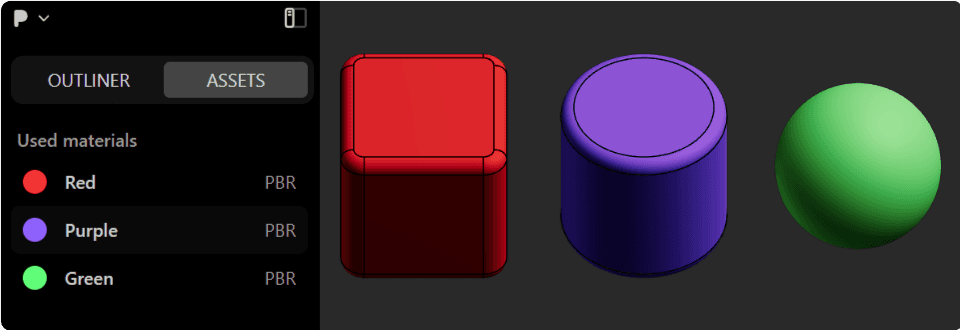
Displayed Materials
- Every material you create appears in the Used Materials section.
- Changing a material's properties updates all objects that use it in real time.
- Materials can't be removed from the list; they disappear only after every object that references them has been deleted from the scene.
- To assign a material to other objects, simply drag and drop it from either the Used Materials or Materials Library sections onto the target object.
Select Materials
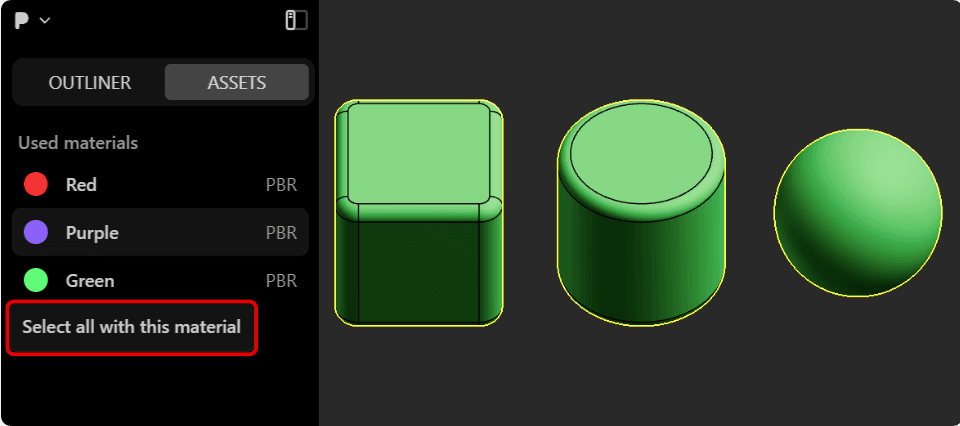
- Right-clicking a material opens the "Select All with This Material" option, allowing you to quickly select all objects sharing that material.
Physical Materials
In the bottom section of the Assets panel, you'll find a broad selection of Physical Materials that come with Plasticity. To view them properly, make sure Render Mode is activated so the shaders are visualized on the objects.
Editing Physical Materials
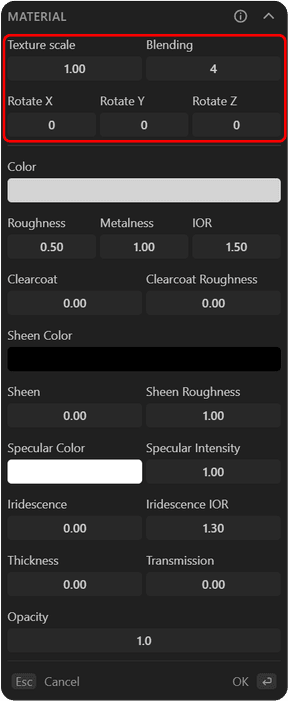
Each material comes with a preset containing unique material properties. You can edit these properties by pressing M on your keyboard.
- Texture scale: Adjusts the overall scale of the texture.
- Blending: Controls the triplanar projection blending. A value of 0 applies maximum blending, while 7 applies no blending at the borders. Useful for hiding obvious seams.
- Rotate: Rotates the material applied to the object.
- Rotate X: Rotates the entire material around the X-axis in world coordinates.
- Rotate Y: Rotates the entire material around the Y-axis in world coordinates.
- Rotate Z: Rotates the entire material around the Z-axis in world coordinates.
Displayed Materials
Below is a table list with all of the available physical materials for preview:
| Name | Thumbnail Preview | Name | Thumbnail Preview |
|---|---|---|---|
| Aluminum |  | Brass |  |
| Aluminum Brushed |  | Brass Oxidized | 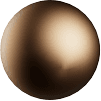 |
| Aluminum Matte | 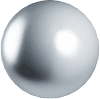 | Car Paint | 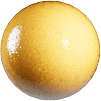 |
| Gold Foil | 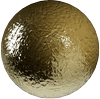 | Concrete | 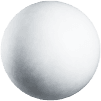 |
| White Plastic |  | Royal Blue Linen |  |
| Rubber | 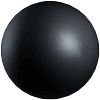 | Porcelain Fabric | 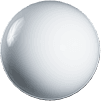 |
| Plastic Rough | 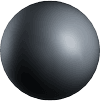 | Brown Leather | 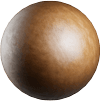 |
| Nickel |  | Milan Polished Marble |  |
| Nickel Oxidized | 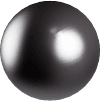 | Cathedral Tile | 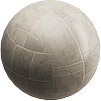 |
| Iron |  | Stainless Steel Brushed | 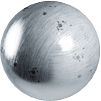 |
| Gold |  | Simple Plaster | 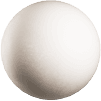 |
| Copper |  | Sandstone |  |
| Copper Oxidized | 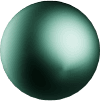 | Perforated Metal | 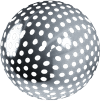 |
| Copper Brushed | 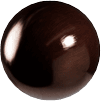 | Hex Metal | 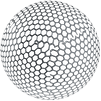 |
| Copper Old |  | Wood Dark Maple | 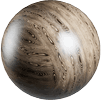 |
| Chrome |  | Wood Painted Green | 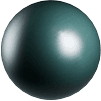 |
| Bronze |  | Wood Walnut | 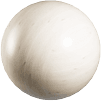 |
| Bronze Oxidized | 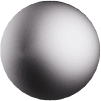 |
🗒️
Note
- Exporting the object as a mesh or CAD file will not preserve the physical material properties when imported into DCC (Digital Content Creation) software such as Blender or Maya. These materials are intended for visualization within Plasticity, allowing you to present the concept of an object using material shaders.